TrainAsONE vs The Running Genie: Which Adaptive Coach Fits Your Training Style?
Both apps generate adaptive training plans. They go about it very differently. Here's what each one actually does well - and which kind of runner fits each.
Disclosure first: I built The Running Genie. So everything below is written by someone with skin in the game. I've tried to be honest about where TrainAsONE genuinely wins, where my own app does, and where the choice comes down to which kind of runner you are. If that bias bothers you, read this alongside reviews from people who don't sell either product.
That said - TrainAsONE is one of the apps I most respect in the AI coaching space. It's been around longer than most, the underlying engineering is serious, and the algorithm is genuinely sophisticated. The comparison isn't between a market leader and an upstart. It's between two apps that approach the same problem from very different angles.
The fundamental philosophical difference
TrainAsONE and The Running Genie both adapt your training. But they adapt it in fundamentally different ways, and that difference is the single most important thing to understand before choosing.
TrainAsONE uses a proprietary machine learning model to generate a fully personalised plan that updates after every workout. The plan isn't built from a recognisable methodology you can audit - it's the output of an algorithm that's been trained on a very large pool of runner data. You don't see "Daniels VDOT" or "80/20" labels on your workouts. You see workouts the algorithm thinks you should do.
The Running Genie uses transparent, established methodology - adaptive Jack Daniels' VDOT pacing combined with 80/20 polarised intensity distribution - and layers algorithmic adaptation on top. The plans are built from named principles you can read about. The adaptation tweaks paces and volumes based on your performance, but the architecture is auditable.
Neither approach is objectively better. Different runners want different things from a coach.
How each app generates plans
The plan-generation flow tells you a lot about how each app thinks.
With TrainAsONE, you input your goal race, your current ability, your weekly availability, and any constraints (e.g., long runs only on weekends). The algorithm churns through that data plus your run history (if connected) and produces a plan. After every run, the plan updates - sometimes subtly, sometimes substantially - based on what the algorithm inferred from your performance.
With The Running Genie, the same inputs are used, but the plan is generated using VDOT-derived training paces and an 80/20 weekly intensity split. As you complete sessions, your VDOT updates from race results and benchmark workouts, and your future paces shift accordingly. The structure of the week (easy / threshold / long run / quality session) follows a pattern recognisable to anyone who's read Daniels' Running Formula.
The result: TrainAsONE feels like a black box that produces good workouts. The Running Genie feels like a coach you can interrogate.
Methodology transparency: where The Running Genie wins
If you care about understanding why you're being asked to do today's workout, The Running Genie is the clearer fit. The plans use named methodology. Easy days target Zone 2. Threshold work uses Daniels' "T" pace. Long runs follow recognisable progression rules. If you want to read the source material - Daniels, Seiler, Magness - and connect it to your prescribed sessions, it lines up.
TrainAsONE doesn't try to do this. The algorithm is the methodology. You can't read a book that explains exactly how it works because no such book exists. For some runners, this is fine ("I trust the algorithm"). For others, particularly experienced runners with their own training philosophy, the opacity is a problem.
Adaptation depth: where TrainAsONE wins
The flip side. TrainAsONE's adaptation runs deeper because it's doing more than calibrating named methodologies - it's potentially restructuring the entire week based on what the algorithm sees in your data.
If you've been doing workouts that suggest you respond unusually well to certain stimuli, TrainAsONE might bias future plans toward those stimuli. If your fatigue patterns suggest a different recovery cadence than the average runner, TrainAsONE will adjust. The Running Genie's adaptation is more constrained - it stays within Daniels-style methodology and adjusts paces and volumes within that framework.
For runners who've found that "standard" methodologies don't quite fit their physiology, TrainAsONE's deeper personalisation can genuinely outperform a methodology-based plan. For runners who fit the standard methodology well (most people), the gap is small.
Pricing
TrainAsONE: roughly $14.99–24.99/month depending on the plan tier you choose, with an annual subscription option at moderate discount. There's a free tier that offers limited functionality.
The Running Genie: free to download with optional Pro membership (monthly, annual, or lifetime). The free tier gives you adaptive plans for the major race distances at no cost.
The pricing gap is real. For a runner training for one race a year, the lifetime tier of The Running Genie is less than two months of TrainAsONE. For runners actively training year-round, the cost difference compounds.
Integrations
TrainAsONE has more direct watch integrations: Garmin Connect, Polar Flow, Strava, COROS, and a few others, with native workout push to most. If you want your structured workouts to appear on your watch with pace targets and rest periods, TrainAsONE's integration is mature across the board.
The Running Genie syncs primarily through Strava (which means Garmin runs flow through automatically, since Garmin pushes to Strava). Direct Connect IQ workout push is on the roadmap for late 2026. For now, runners typically run from their phone with the Running Genie app providing pace targets, or export workouts to Garmin Connect manually.
If watch integration is critical to your workflow, TrainAsONE has the edge today. If you're comfortable running from your phone or via Strava, the gap matters less.
UI and day-to-day experience
Both apps are competent. Different aesthetic choices.
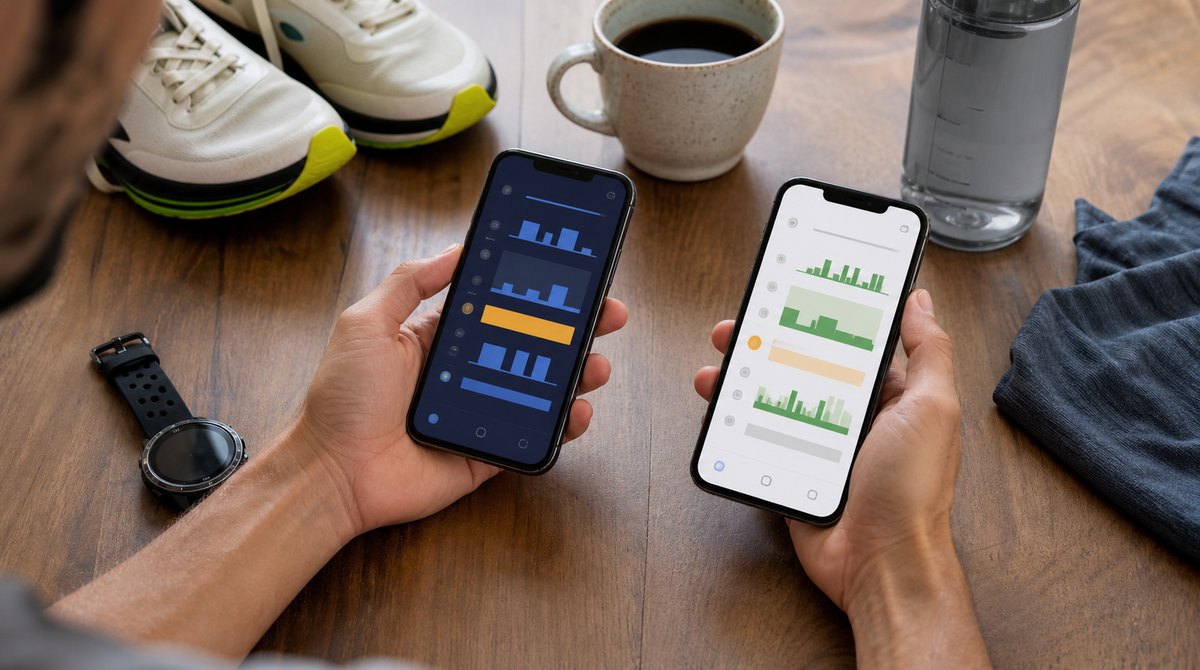
TrainAsONE leans into data density - graphs, metrics, training load visualisations. The interface rewards runners who like to dig into their numbers. It can feel busy if you just want to know what to run today.
The Running Genie leans into clarity - "here's tomorrow's workout, here's why, here's the pace." Less data on the surface, accessible if you go looking for it. Fits runners who want their app to disappear once it's told them what to do.
Neither is objectively better. Try both for a week and see which one fades into your routine more comfortably.
Quick comparison:
Methodology: TrainAsONE = proprietary ML / The Running Genie = Daniels VDOT + 80/20
Adaptation depth: TrainAsONE deeper / The Running Genie methodologically constrained
Transparency: The Running Genie wins clearly
Pricing: The Running Genie ~3–4x cheaper
Watch integration: TrainAsONE more mature today
Race distances: Both support 5K through marathon; The Running Genie also supports ultra
Free tier: Both offer one; The Running Genie's is more usable for sustained training
Who fits which app
TrainAsONE fits you if:
- You're comfortable with algorithmic black-box coaching and don't need to see the methodology
- You want maximum adaptation depth and trust ML to find what works for your body
- Watch integration is critical to your workflow
- You don't mind paying $15–25/month for the most personalised plans on the market
The Running Genie fits you if:
- You want methodology transparency - Daniels VDOT and 80/20 are visible in your plan
- Cost matters and a one-time lifetime option feels right
- You're training for ultra distances (TrainAsONE doesn't support these)
- You're already in the Strava ecosystem and don't need direct watch integration immediately
Where they're equally good
For a typical amateur runner training for a marathon or half marathon, both apps will get you to race day in similar shape. The plan quality difference between sophisticated AI coaching apps is much smaller than the difference between any AI coach and an unstructured "just run" approach.
What matters more than which app you choose is whether you actually execute the plan consistently for a full training cycle. If you're switching apps every two weeks chasing the perfect algorithm, you're not doing the work that actually makes you faster.
Honest recommendation
If you're new to structured training, start with The Running Genie's free tier - it's enough to train for any major race distance, and the methodology transparency helps you learn what's happening in your training as you go.
If you've trained for several races already and are looking for the next level of personalisation, try TrainAsONE's free trial. If the algorithmic adaptation clicks for you, the higher price is justified. If it feels arbitrary or random, switch back.
And if neither fits, our broader AI coach comparison covers the rest of the field.
The honest truth about comparing AI coaching apps is that the technology is converging. The gap between the best apps and the second-best is narrower than the marketing suggests. The gap between any structured app and unstructured training is enormous.
Pick a coach. Use it for a full training cycle. Run the runs. The app you stick with will outperform the app you would have switched to in three weeks anyway.
The best app is the one you actually follow.
The Running Genie — AI training plans built around your real running data. Free to download.