Adaptive Marathon Training Plan Apps: An Honest 2026 Comparison
Static printed marathon plans were built for runners who don't exist. Adaptive plans absorb the disruption every real marathoner runs into. Here's how the main apps compare in 2026.
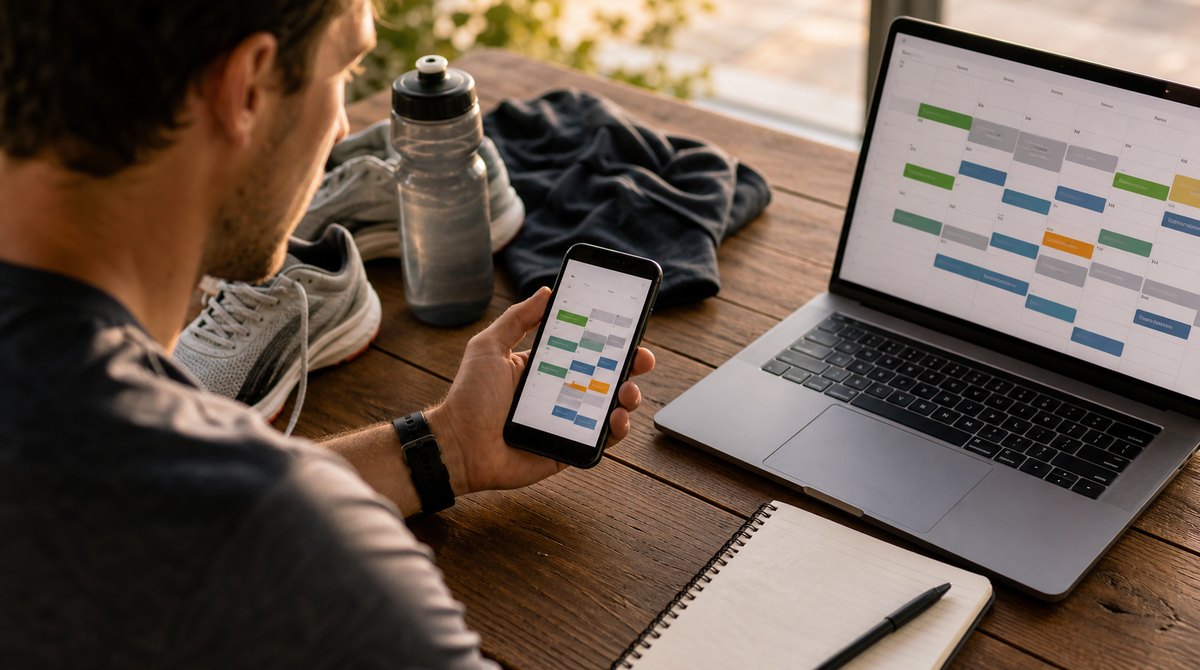
The marathon is the race that exposes weak training plans most ruthlessly. A 5K plan that's slightly off costs you 30 seconds. A marathon plan that's slightly off costs you 20 minutes - or, more often, the race itself. Which is why the question of which training plan to follow matters more for a marathon than for any shorter distance.
The honest truth: adaptive marathon training plans have largely replaced static printed plans as the best option for most amateur marathoners. Not because static plans (Higdon, Pfitzinger, Hanson) are bad - they're battle-tested. But because life is disruptive, and adaptive plans absorb that disruption in a way static plans don't.
Here's how the main adaptive marathon apps stack up in 2026.
What "adaptive" actually means for a marathon plan
Before the comparison, a definition. An adaptive marathon plan does at least these four things:
- Updates pace prescriptions as your fitness changes (typically through VDOT or equivalent)
- Adjusts upcoming workouts based on completed sessions - if you ran the threshold workout faster than prescribed, future paces shift
- Handles missed sessions gracefully - skip a long run and the plan reorganises rather than just pushing the schedule forward
- Manages cumulative fatigue - backs off volume when training load is high relative to recovery patterns
Apps that don't do all four aren't really adaptive - they're static plans with cosmetic personalisation. We covered the broader adaptive vs static framing in this post.
Now to the apps that do the four things well.
The Running Genie
Disclosure: my app. The marathon plans use adaptive Daniels VDOT pacing combined with 80/20 intensity distribution. As you complete sessions, your VDOT updates from races and benchmark workouts; future paces follow. Volume scales with completion patterns. Missed sessions trigger plan reorganisation.
Methodology: Transparent. Explicitly Daniels + 80/20. Visible to runners who care about understanding their plan.
Pricing: free to download with optional Pro membership (monthly, annual, or lifetime). Free tier supports marathon training.
Integration: Strava primary (which captures Garmin runs); direct Connect IQ workout push later in 2026.
Best fit: Runners who want methodology transparency, flat pricing, and don't need maximally polished UX.
Runna (Strava-owned)
Runna built its reputation on slick marathon plan UX with strong adaptive logic. Now part of Strava following the 2025 acquisition. Plans look great, push to most major watches, and adapt with reasonable depth.
Methodology: Hybrid. Conventional periodisation with proprietary adaptive tweaks. Less transparent than methodology-named apps but solid.
Pricing: $19.99/month - premium tier of the market.
Integration: Strong, particularly with Garmin and Apple Watch. Native Strava integration is mature.
Best fit: Runners who live in Strava, value polished UX, and don't mind paying for it.
Caveat: Post-acquisition trajectory is unclear - Strava may eventually fold features into Strava Premium. We covered the implications here.
TrainAsONE
TrainAsONE uses machine learning to generate plans more dynamically than methodology-based apps. The plans aren't built from named principles - the algorithm decides week by week what your training should look like.
Methodology: Proprietary ML, opaque to runners.
Pricing: $14.99–24.99/month depending on tier.
Integration: Mature with Garmin, COROS, Polar, and Strava. Workout push to most modern watches.
Best fit: Runners who want maximum algorithmic adaptation and trust ML over named methodology. We did a deeper TrainAsONE comparison for the head-to-head detail.
Athletica
Athletica is built around the work of Dr Paul Laursen, with strong physiological grounding. Particularly suited to triathletes and ultra runners, but the marathon plans are credible.
Methodology: Polarised and pyramidal training distributions, evidence-based intervals.
Pricing: ~$15/month.
Integration: Garmin Connect, Strava, COROS via API.
Best fit: Runners who care about the physiology of why each session exists; multisport athletes; ultra-distance runners.
Garmin Coach (free, Garmin only)
Worth mentioning even though Garmin Coach doesn't currently support marathons natively - it's a half-marathon-and-shorter platform. For marathon training as a Garmin user, third-party apps remain the better path.
If Garmin adds marathon support in a future Garmin Coach update, the calculus could shift. As of mid-2026, no public timeline for this.
COROS Training Hub (free, COROS-friendly)
COROS Training Hub does include marathon plans, with reasonable adaptation and credible coach-designed structure. Works best with a COROS watch but accessible via app to others.
For COROS users, this is a strong free starting point. Move to a paid app only if you need ultra distances, specific methodology, or deeper personalisation. Our COROS coach guide goes into detail.
The decision framework
For most amateur marathoners, the decision narrows to a few questions.
What's your budget? If $5/month works, The Running Genie. If $20/month is fine, you have all four major paid options. If free, Garmin Coach (when they add marathon support) or COROS Training Hub if you have those watches.
How important is watch integration? If critical (you live on your Garmin display): TrainAsONE or Runna are mature. The Running Genie syncs via Strava today; direct watch integration coming.
Do you care about methodology transparency? If yes: The Running Genie (Daniels + 80/20) or Athletica (Laursen physiology). If you trust the algorithm: TrainAsONE.
Do you train for ultras as well? Athletica, The Running Genie. Most others cap at marathon.
Are you embedded in the Strava ecosystem? Runna integrates most natively now that it's a Strava property.
Quick comparison table:
The Running Genie: free with optional Pro membership; Daniels + 80/20; Strava sync; ultra support.
Runna: $19.99/mo; hybrid methodology; mature watch sync; Strava-ecosystem-native.
TrainAsONE: $15-25/mo; opaque ML; mature multi-watch sync; deepest adaptation.
Athletica: ~$15/mo; Laursen physiology; tri/ultra-friendly.
COROS Training Hub: Free with COROS watch; coach-designed templates.
The unsexy truth about marathon training plan apps
The differences between any of these apps are smaller than the difference between using one of them and not using one. A marathoner who follows the plan in any of these apps consistently for 16 weeks will outperform a marathoner who switches between three of them every few weeks chasing the perfect algorithm.
The execution gap matters more than the app gap. Pick something. Use it for the full marathon block. Run the runs. The fastest marathoners aren't the ones with the best app - they're the ones who completed 95% of the prescribed sessions and arrived at the start line healthy and confident.
For more on actual marathon execution once you've picked a plan, see our marathon training plan piece and the marathon pacing guide.
What I'd recommend
If you're new to marathon training, start with The Running Genie's free tier. It's enough to get you to a first marathon finish line, the methodology is transparent enough to teach you something, and you can upgrade later if you want more.
If you have one or two marathons behind you and are chasing a specific time goal, any of the four paid options will serve you. Pick based on the secondary criteria - pricing, methodology preference, watch integration.
If you're an experienced marathoner with a strong sense of your own training, you may not need an app at all - a static Pfitzinger or Magness plan executed with self-coaching judgment is still completely viable. Adaptive apps are most valuable when you're outsourcing the judgment, not when you have your own.
The era of taping a printed marathon plan to your fridge isn't over - it just isn't the dominant model anymore. Adaptive plans handle the messy reality of training in a life that doesn't pause for your marathon block. They let you skip a sick week without unraveling the plan. They let your faster fitness translate into faster prescribed paces without you having to manually recalculate. They handle the maths so you can do the running.
Pick the one that fits your budget, your watch, and your appetite for methodology depth. Then stop comparing and start training. The marathon doesn't care which app you used. It only cares whether you did the work.
The plan that adapts beats the plan that doesn't. The plan you actually execute beats both.
The Running Genie — AI marathon plans that adapt to the training you actually did. Free to download.