What Is a Good VO2 Max by Age? A Runner's Guide to the Numbers
VO2 max declines with age, so a good value is always relative to age and sex. The number is useful context, but it is not a verdict on how fast a runner can race.
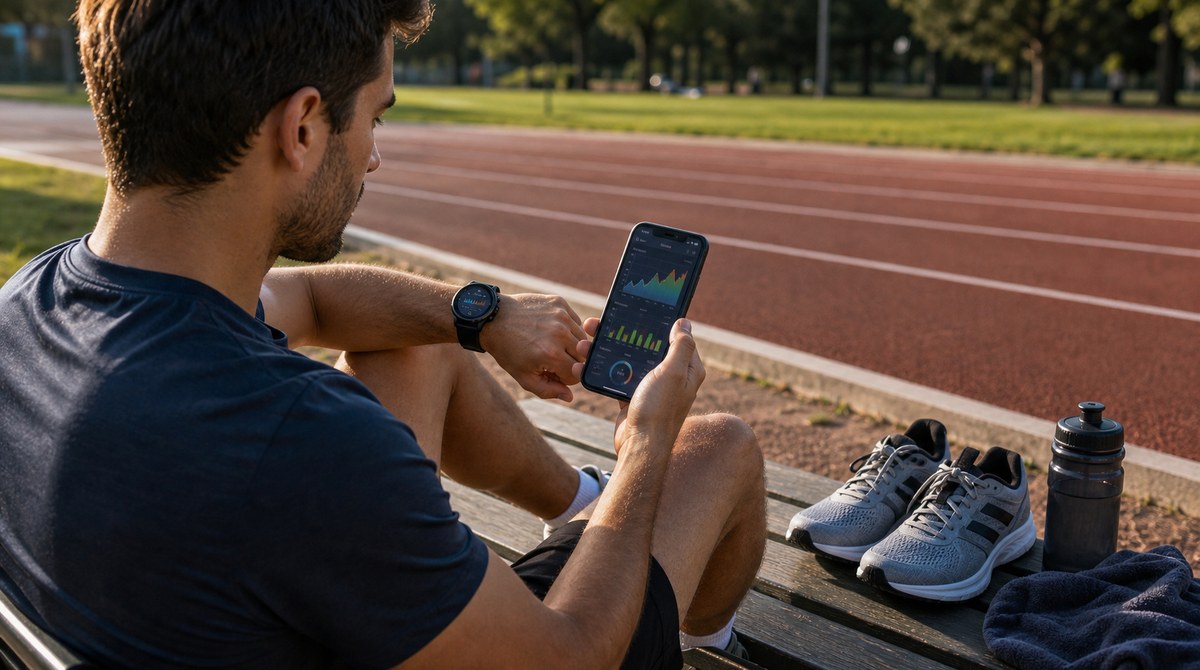
VO2 max is the maximum rate at which the body can use oxygen during hard exercise, and it is one of the most-watched numbers in running. The most common question about it is also the most reasonable: what counts as good? The honest answer is that it depends on age and sex, because VO2 max naturally falls as people get older.
That makes the comparison that matters a narrow one. A value is good or not relative to other people of similar age and sex, not relative to a twenty-five-year-old or to an elite marathoner. A 45-year-old runner and a 25-year-old runner with the same number are in very different percentiles.
Disclosure: The Running Genie is the app behind this site. This article explains how to read VO2 max honestly. The ranges below are general orientation, not medical advice or a precise personal assessment.
1. Why VO2 max is read by age
VO2 max tends to peak in the late teens to late twenties and then declines gradually with age, more steeply if training stops. Because the whole population trends down over time, fitness categories such as poor, fair, good, and excellent are defined within age bands. A value that is merely average at 30 might be excellent at 55.
This is also why staying active matters so much. Consistent endurance training slows the age-related decline, which is part of the broader case for training smart as the years add up in running after 40.
2. How to read VO2 max ranges
VO2 max is measured in millilitres of oxygen per kilogram of body weight per minute. Rather than memorise exact cutoffs that vary by source, it helps to think in tiers within an age group:
- Below average: typical of a sedentary lifestyle for that age and sex.
- Average: common in lightly active people.
- Good to excellent: where many recreational runners land with regular training.
- Superior: well-trained and competitive runners for their age group.
Two values shift the tiers: age, which lowers the bar for a given category over time, and sex, since average values differ between men and women largely due to physiology. The takeaway is to compare like with like.
3. Why watch VO2 max is an estimate
Most runners get their number from a watch rather than a lab. A watch infers VO2 max from pace and heart rate during runs, which is directionally useful but not exact. The estimate can drift with heat, fatigue, poor GPS, an inaccurate heart rate reading, or a change in running surface.
That is why trends beat single readings. A watch estimate that climbs over months of consistent training is meaningful. A two-point jump after one good run is not. The number deserves the same scepticism as any modelled value: useful as a trend, unreliable as a precise score.
4. Why a higher number does not guarantee faster races
VO2 max sets a ceiling, but it does not decide performance on its own. Running economy, durability over distance, pacing skill, fueling, heat tolerance, and race-specific fitness all sit between physiology and the finish line. Two runners with the same VO2 max can post very different times.
This is exactly why training paces are better anchored to performance than to a fitness estimate. A recent race result, fed through a performance model, usually gives more useful paces than a VO2 max figure. The distinction is unpacked in VDOT vs VO2 max, and the underlying physiology in VO2 max for runners explained.
5. What to actually do with the number
VO2 max is best used as long-term context, not a daily target. Watch whether it trends up across consistent training, expect it to wobble with heat and fatigue, and do not let a dip during a hard block convince a runner that fitness has collapsed. For setting paces and building a plan, a recent benchmark is the more honest input.
If the goal is to translate fitness into training paces and race targets, a VDOT-based approach using a recent result is the practical route. The race time predictor turns that result into something a plan can use.
6. How The Running Genie uses fitness signals
The Running Genie focuses on the practical side: turning recent runs and benchmarks into adaptive paces and progression. Fitness estimates can be background context, but the plan is anchored to what a runner has actually demonstrated, which keeps training paces grounded rather than chasing a single fitness score.
The Running Genie turns recent running results into adaptive training paces and plan updates, anchored to real performance rather than a fitness estimate. Free to download, with Strava, Garmin, Polar, Suunto, Apple Health, Health Connect, and file-upload paths depending on platform and device.
A good VO2 max is the right number for your age, trending the right way. It is context, not a scoreboard.
Compare like with like. Train from performance, not from a single estimate.