What makes a running plan actually personalized?
Four things. If a plan is missing any of them, it's a template with extra steps:
- Paces derived from your measured fitness. A recent race result — or your run history — maps to a fitness score (VDOT), and that score maps to your personal easy, tempo, interval, and race paces. "Run at a comfortable pace" is not personalization; "your easy pace is 6:25/km" is.
- Volume matched to what you currently run. If you're running 20 km a week, a plan that opens at 40 km isn't ambitious — it's an injury schedule. Personalized volume starts from your real weekly kilometres and progresses from there.
- Schedule fit. How many days a week you can run, and which days, shapes everything: where the long run sits, how quality sessions space out, where recovery lands. A plan that assumes 5 running days when you have 3 will be abandoned by week two.
- Ongoing adaptation. A plan personalized on day 1 but frozen after is only personalized once. Fitness changes, life interferes, some weeks go better than expected — a genuinely personal plan keeps adjusting to what actually happens.
A template with your name on it vs a real personalized plan
Most "custom" running plans are fake personalization. You enter a goal finish time, and behind the scenes the tool picks one of three or four pre-written templates by finish-time bracket — the same 12 weeks that everyone in your bracket receives, with your name printed at the top. Nothing about it knows how much you currently run, which days you're free, or whether your last three weeks went well.
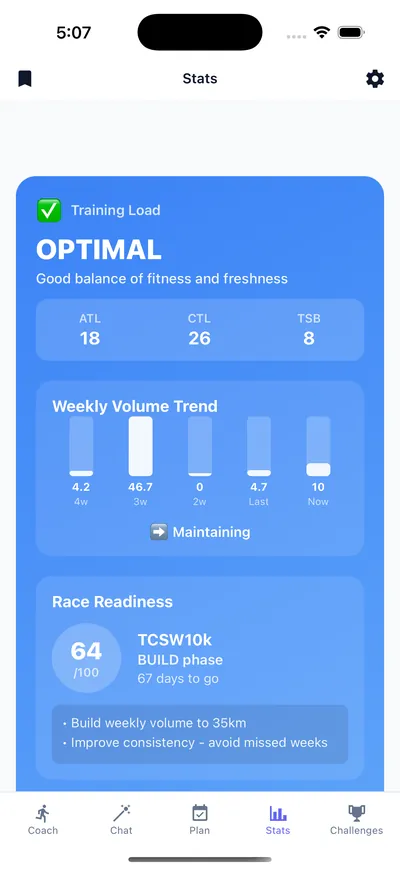
Real personalization uses your training history. Your recent runs contain everything a coach would want to know: your actual paces, your weekly volume, how consistently you train, how your fitness is trending. A plan built from that data starts where you are — not where a template assumes the average runner in your bracket to be.
The sports science behind personal training paces
The most widely used model for personalizing paces is Daniels' VDOT. VDOT is a single number computed from a race or strong run performance that represents your current running fitness. From that one number, the model derives all of your training paces — easy, marathon, threshold, interval, and repetition. It's how coaches translate "you ran a 25:00 5K" into "your tempo pace is 5:10/km." You can read the full explanation of how VDOT works.
Two more principles complete the picture. 80/20 intensity distribution: around 80% of your running should be genuinely easy, with only ~20% at tempo pace or faster — the split used by elite endurance athletes across sports, and the one most self-coached runners get wrong by running everything medium-hard. And progressive overload with cutback weeks: volume builds gradually, with a lighter recovery week every third or fourth week so adaptation can catch up with the training stress.
A personalized plan applies all three to your numbers: your VDOT sets the paces, your history sets the volume, and the structure balances hard and easy across the days you have.
How The Running Genie personalizes your plan
The plan is built from four honest data sources:
- Your run history — synced from Strava, Garmin, Polar, Suunto, or Apple Health. The AI reads your pace trends, typical distances, and training consistency to measure your current fitness rather than asking you to guess it.
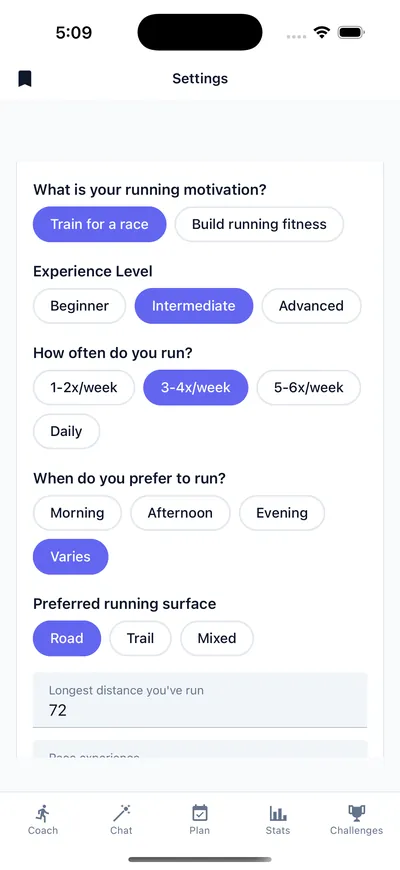
- Your profile answers — experience level, how many days per week you can run, your race goal and date (or a general fitness goal), and preferred running surface.
- Weekly feeling check-ins — fresh, normal, tired, or injured. A plan that ignores how you feel will push you into a hole; one that listens backs off before a niggle becomes an injury.
- Your actual completed workouts — what you really ran versus what was scheduled, which is what drives the weekly reshaping.
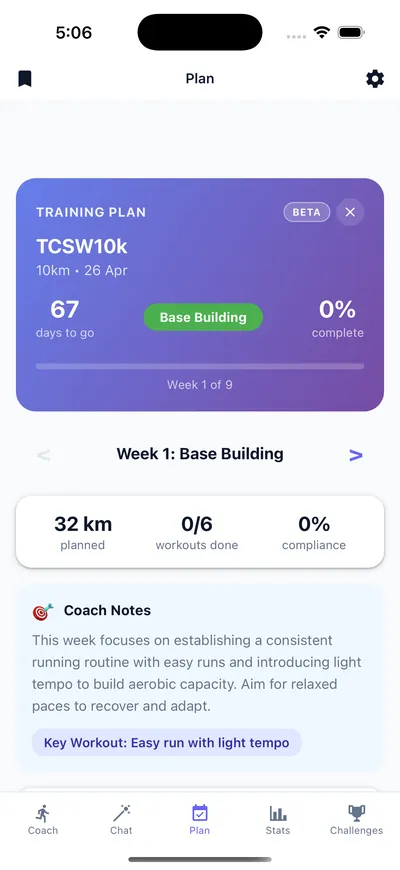
The output is a race-specific plan with your paces on every session — and it doesn't freeze after generation. Each week the plan reshapes based on what you ran and how you're feeling, so week 8 is built from your first seven weeks of real training, not from a guess made on day one.
Getting your personalized plan, step by step
Connect your runs
Sign in with Strava, Garmin, Polar, Suunto, or Apple Health. Your running history syncs automatically and becomes the fitness baseline for the plan.
Set your goal
A race — 5K to marathon, with a date and optional target time — or a general fitness goal if you're not racing. The plan is built backwards from the date.
Answer the profile questions
Experience, days per week, preferred days, surface, and what motivates you. This is where the schedule gets shaped around your life instead of the other way round.
Get the plan in about 2 minutes
Weekly structure, long run progression, quality sessions, and paces computed from your data — every session with your numbers on it.
Train, and let it adapt weekly
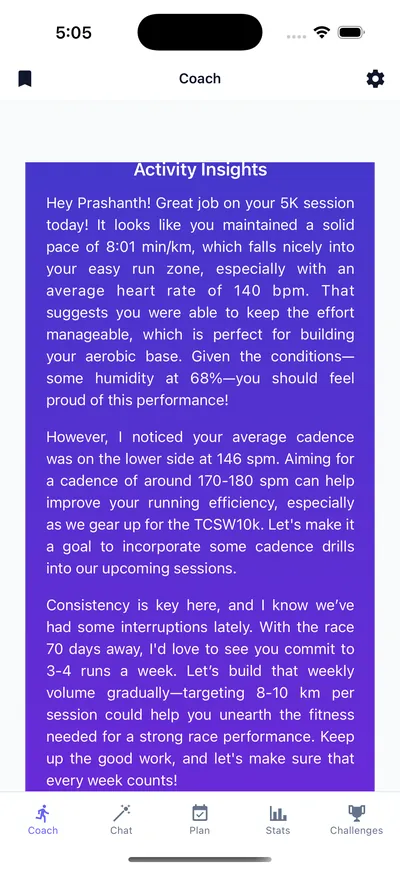
Each week the plan looks at what you actually ran and your feeling check-in, then adjusts the next week's volume and intensity. The AI coach explains every change.
What that looks like in the app
Free and Pro, honestly
The Running Genie is free to download on iOS and Android. The free tier includes AI coach conversations, run syncing, and a free preview of your personalized plan. Full plan access — the complete week-by-week schedule with ongoing adaptation — is part of the Pro subscription ($7.99/month or $49.99/year).
For context: a human running coach typically costs $100–300 per month. An adaptive app is not a full replacement for one-on-one human coaching — but for the core job of building a plan around your data and adjusting it week by week, it covers most of what a coach does for a small fraction of the price.
Personalized running plan FAQ
What makes a running plan personalized?
Four things: training paces derived from your measured fitness (a recent race or your run history), weekly volume matched to what you currently run, a schedule built around your available days, and ongoing adaptation as training unfolds. A plan that only asks for your goal time and picks a template is personalized in name only.
Can I get a personalized running plan for free?
Partly. The Running Genie is free to download, and you can preview your personalized plan for free before paying anything. Free tools like the VDOT calculator also give you genuinely personalized training paces from a recent race result. The full week-by-week adaptive plan is part of the Pro subscription.
Can the plan fit 3 running days a week?
Yes. Days per week is one of the core inputs, and 3 days is a common and effective setup: typically a long run, one quality session, and one easy run. The plan distributes volume across the days you actually have rather than assuming you can run five or six times a week.
What happens if I miss a week?
The plan reshapes instead of piling up missed sessions. After a missed week, cramming the skipped workouts on top of the current schedule is a classic injury path — so the next weeks are rebuilt from where your training actually is, easing volume back up before progressing again.
Is a personalized app plan as good as a human coach?
For elite performance or complex situations — injuries, unusual physiology, championship racing — a good human coach is better. For most runners, an adaptive AI plan beats a static template comfortably: it sets paces from your real data, fits your schedule, and adjusts every week, at a small fraction of the $100-300 per month a human coach typically costs.
Get a plan built from your running
Download The Running Genie free, connect your runs, and preview a plan built around your fitness, your schedule, and your goal — in about two minutes.


Free download · Works with Strava, Garmin, Polar, Suunto & Apple Health