What a beginner actually needs from a running app
Strip away the marketing and a new runner needs four things:
- Guidance: a clear answer to "what should I do today?" — how far, how fast, run or rest. Not a blank map screen waiting for you to press start.
- Realistic pacing: the #1 beginner mistake is running easy runs too fast. Every run turns into a slog, everything hurts, and running starts to feel like punishment. An app that gives you an honest easy pace — and permission to go that slow — changes the whole experience.
- Gradual progression: your heart and lungs adapt in weeks; tendons and joints take months. A good app builds volume slowly enough that your body keeps up, which is how you avoid the shin splints and knee pain that end most beginner attempts.
- Encouragement and accountability: something that notices when you show up, and doesn't shame you when you don't.
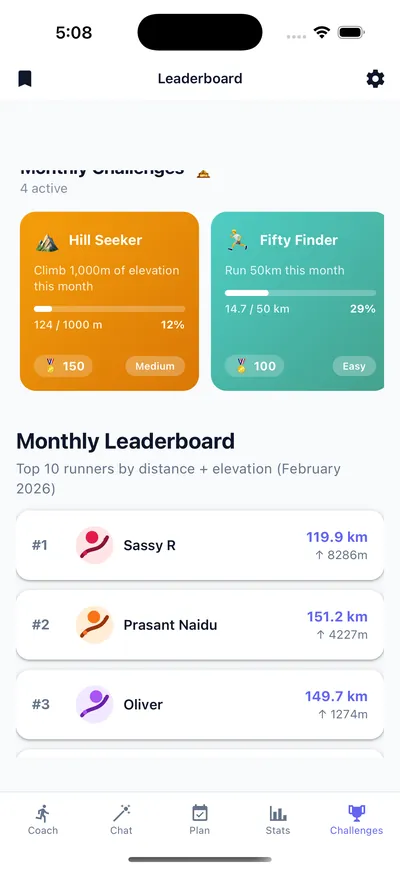
What you don't need yet: advanced metrics dashboards, segment leaderboards against strangers, or an obsession with VO2max. Those are fun later. In month one they're noise — and comparing your numbers to experienced runners' is actively discouraging.
The mistakes a good app prevents
Most beginners quit for one of four preventable reasons:
- Too fast, too soon. Without a target pace, almost everyone runs at "effort that feels like exercise" — which is far too hard for building an aerobic base. Easy-pace discipline is the single biggest thing a coaching app enforces.
- No rest structure. Enthusiasm says run every day; adaptation happens on the days between runs. A plan bakes rest in so you don't have to negotiate with yourself.
- Comparing yourself to others. Social feeds full of 5-minutes-per-km club runs make a beginner's honest 8-minutes-per-km feel like failure. It isn't — it's exactly where you should be.
- Quitting after a bad week. A missed week feels like the plan is broken and starting over is the only option. A plan that quietly adjusts and says "pick up here" keeps a bad week from becoming a bad month.
Walk-run is real training
If you can't yet run 20 minutes without stopping, intervals of running and walking are not a lesser version of training — they are the training. Alternating a few minutes of easy running with a minute or two of walking lets you accumulate more total time on your feet at lower injury risk, and the running portions stretch out naturally week by week. Nobody at the park knows or cares whether you're on a walk interval. Coaches have used run-walk progressions with complete beginners for decades because they work.
How The Running Genie works for beginners
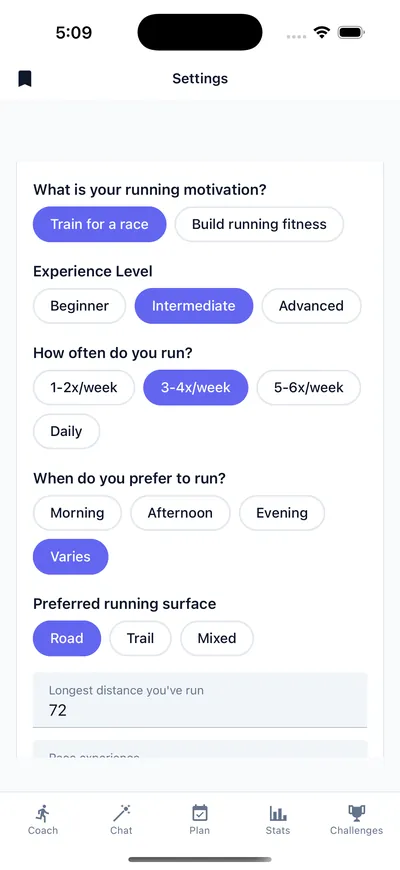
The Running Genie is an AI running coach, not just a tracker — and it's built to meet you where you are. During setup you tell it you're a beginner: your experience level, how many days per week you can realistically run, and what's driving you — a race on the calendar or simply getting fitter. From that, it builds a gentler plan with paces calculated from your fitness, not a generic table.
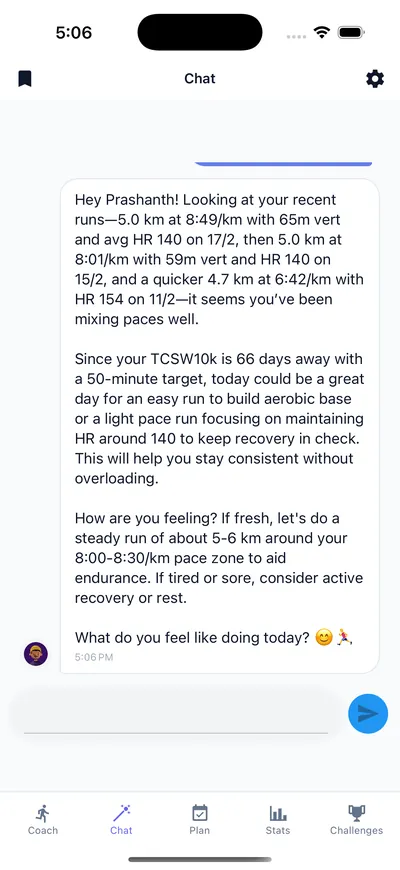
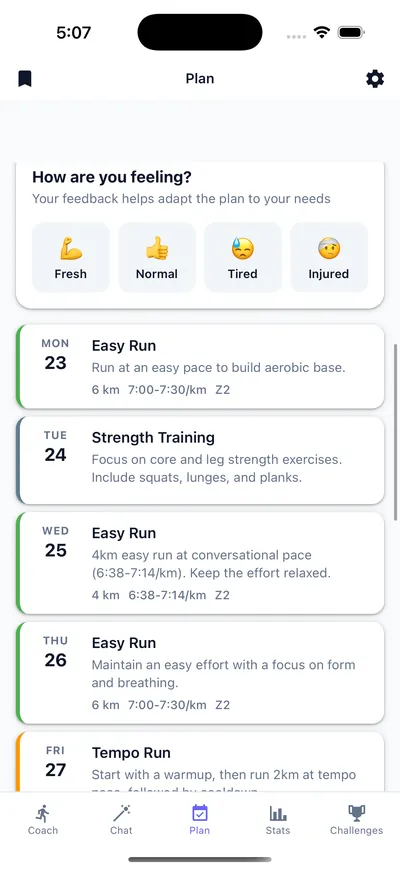
Then the coaching starts. Every workout comes with a plain-language explanation of what it is and why it's there, and you can ask the AI coach anything — "Should I run easy today?", "My legs are sore, is that normal?" — and get an answer grounded in your own training. Each week the plan adapts to how you say you're feeling: fresh, normal, tired, or injured. Tell it you're wiped, and next week eases off instead of piling on.
What that looks like in the app
What you need to get started (honestly)
The Running Genie doesn't record GPS itself — your runs sync in from wherever they already live: Strava, Garmin, Polar, Suunto, or Apple Health. A phone is all you need. Runs captured in your phone's health data or recorded with the free Strava app count just the same, and manual FIT, GPX, or TCX upload is there as a fallback. No watch required — if you fall in love with running and buy one later, it plugs straight in.
Getting started, step by step
Download the app free
Available on iOS and Android. No payment details needed to start.
Connect where your runs live
Sign in with Strava, Garmin, Polar, Suunto, or Apple Health. If you've never recorded a run before, the free Strava app on your phone is an easy place to start.
Answer the beginner profile questions
Experience level, days per week you can run, whether you're chasing a race or general fitness. Honest answers make a better plan — there are no wrong ones.
Preview your plan
See the week-by-week structure the AI builds for you — gentle volume, easy paces from your fitness, rest baked in — before committing to anything.
Run, check in, let it adapt
After each week, tell the app how you're feeling — fresh, normal, tired, or injured — and the next week adjusts. The coach explains every change.
Free and Pro, honestly
The Running Genie is free to download on iOS and Android. The free tier includes AI coach conversations, run syncing, and a free preview of your personalized plan. Full adaptive plans — the complete week-by-week schedule with ongoing adaptation — are part of the Pro subscription ($7.99/month or $49.99/year). What's free and what's Pro is clear before you start; nothing gets paywalled mid-training.
Beginner running app FAQ
What is the best running app for beginners?
The best running app for a beginner is one that tells you what to do today, keeps your easy runs genuinely easy, and builds volume gradually. Trackers like Strava and Nike Run Club are excellent at recording runs, but they mostly leave the planning to you. The Running Genie is built for guidance: it creates a plan from your actual fitness, explains every workout in plain language, and adapts week by week as you go.
Do I need a running watch to use it?
No. A phone is enough — runs recorded with the free Strava app or captured in your phone's Apple Health data sync automatically, and you can also upload FIT, GPX, or TCX files manually. If you later buy a Garmin, Polar, or Suunto watch, it connects directly.
How many days a week should a beginner run?
Two to three days a week is plenty to start, with rest days or walking days in between. Consistency across weeks matters far more than cramming in extra sessions. The Running Genie asks how many days you can realistically run and builds the plan around that number instead of an ideal one.
How fast should a beginner run?
At a conversational pace — if you can't speak in full sentences while running, slow down, even if that means walking. Running easy runs too fast is the most common beginner mistake. The Running Genie calculates your personal easy pace from your actual runs, so you get a concrete number instead of guesswork.
Is The Running Genie free for beginners?
The app is free to download on iOS and Android. AI coach conversations, run syncing, and a free preview of your personalized plan are included in the free tier. Full adaptive plans are part of the Pro subscription at $7.99/month or $49.99/year.
Start running with a coach in your pocket
Download The Running Genie free, answer a few questions about where you're starting from, and preview a beginner plan built around your life — easy paces, rest days, and a coach who explains everything.


Free download · Works with Strava, Garmin, Polar, Suunto & Apple Health